Intellij Idea – How to Build Project Automatically
Last updated: February 19, 2026


Mocking is an essential part of unit testing, and the Mockito library makes it easy to write clean and intuitive unit tests for your Java code.
Get started with mocking and improve your application tests using our Mockito guide:
Handling concurrency in an application can be a tricky process with many potential pitfalls. A solid grasp of the fundamentals will go a long way to help minimize these issues.
Get started with understanding multi-threaded applications with our Java Concurrency guide:
Spring 5 added support for reactive programming with the Spring WebFlux module, which has been improved upon ever since. Get started with the Reactor project basics and reactive programming in Spring Boot:
Since its introduction in Java 8, the Stream API has become a staple of Java development. The basic operations like iterating, filtering, mapping sequences of elements are deceptively simple to use.
But these can also be overused and fall into some common pitfalls.
To get a better understanding on how Streams work and how to combine them with other language features, check out our guide to Java Streams:
Explore Spring Boot 3 and Spring 6 in-depth through building a full REST API with the framework:
Yes, Spring Security can be complex, from the more advanced functionality within the Core to the deep OAuth support in the framework.
I built the security material as two full courses - Core and OAuth, to get practical with these more complex scenarios. We explore when and how to use each feature and code through it on the backing project.
You can explore the course here:
All Access is finally out, with all of my Spring courses. Learn JUnit is out as well, and Learn Maven is coming fast. And, of course, quite a bit more affordable. Finally.
>> GET THE COURSE
Spring Data JPA is a great way to handle the complexity of JPA with the powerful simplicity of Spring Boot.
Get started with Spring Data JPA through the guided reference course:
Refactor Java code safely — and automatically — with OpenRewrite.
Refactoring big codebases by hand is slow, risky, and easy to put off. That’s where OpenRewrite comes in. The open-source framework for large-scale, automated code transformations helps teams modernize safely and consistently.
Each month, the creators and maintainers of OpenRewrite at Moderne run live, hands-on training sessions — one for newcomers and one for experienced users. You’ll see how recipes work, how to apply them across projects, and how to modernize code with confidence.
Join the next session, bring your questions, and learn how to automate the kind of work that usually eats your sprint time.
1. Introduction
IntelliJ IDEA is a powerful IDE for Java and other JVM-based languages, offering numerous features to enhance productivity. One key feature allows IntelliJ IDEA to automatically build projects whenever changes occur, eliminating the need for manual compilation. This feature is particularly useful when working on large projects or needing continuous compilation for features like hot reload.
In this tutorial, we’ll explore how to enable automatic project builds in IntelliJ IDEA and integrate it with features like hot reload for faster development.
2. Building Our Project
By default, IntelliJ IDEA doesn’t build projects automatically after every code change. Instead, the IDE requires manual intervention to compile the code. Additionally, depending on the nature of our development tasks, we may need to compile files multiple times per session. We can either click the “Build Project” menu option or use hotkeys to compile files:
- Compile individual files: We can press Ctrl + F9 (⌘ + F9 on MacOS) to compile only the modified files. This is useful when working on specific modules or classes within larger projects:

- Recompile the entire project: To ensure that all files, including those that depend on the current changes, are compiled, we use the shortcut Ctrl + Shift + F9 (⌘ + ⇧ + F9 on MacOS). This triggers a full project recompilation:

3. Enabling Automatic Project Builds
However, IntelliJ IDEA can automatically build the project whenever changes occur without requiring us to manually trigger a build.
Moreover, enabling this feature can significantly streamline the development process, especially when combined with automated tests, live reloads, or other continuous integration tools.
3.1. Step 1: Open Build Settings
To enable automatic builds, we can change the settings in IntelliJ IDEA by navigating to File > Settings:
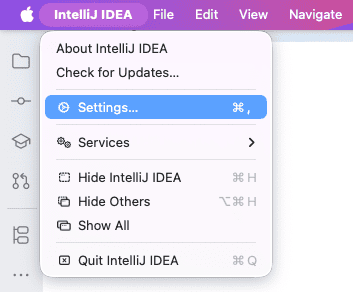
In the settings dialog, search for “Compiler” and select Build, Execution, Deployment > Compiler from the search results:
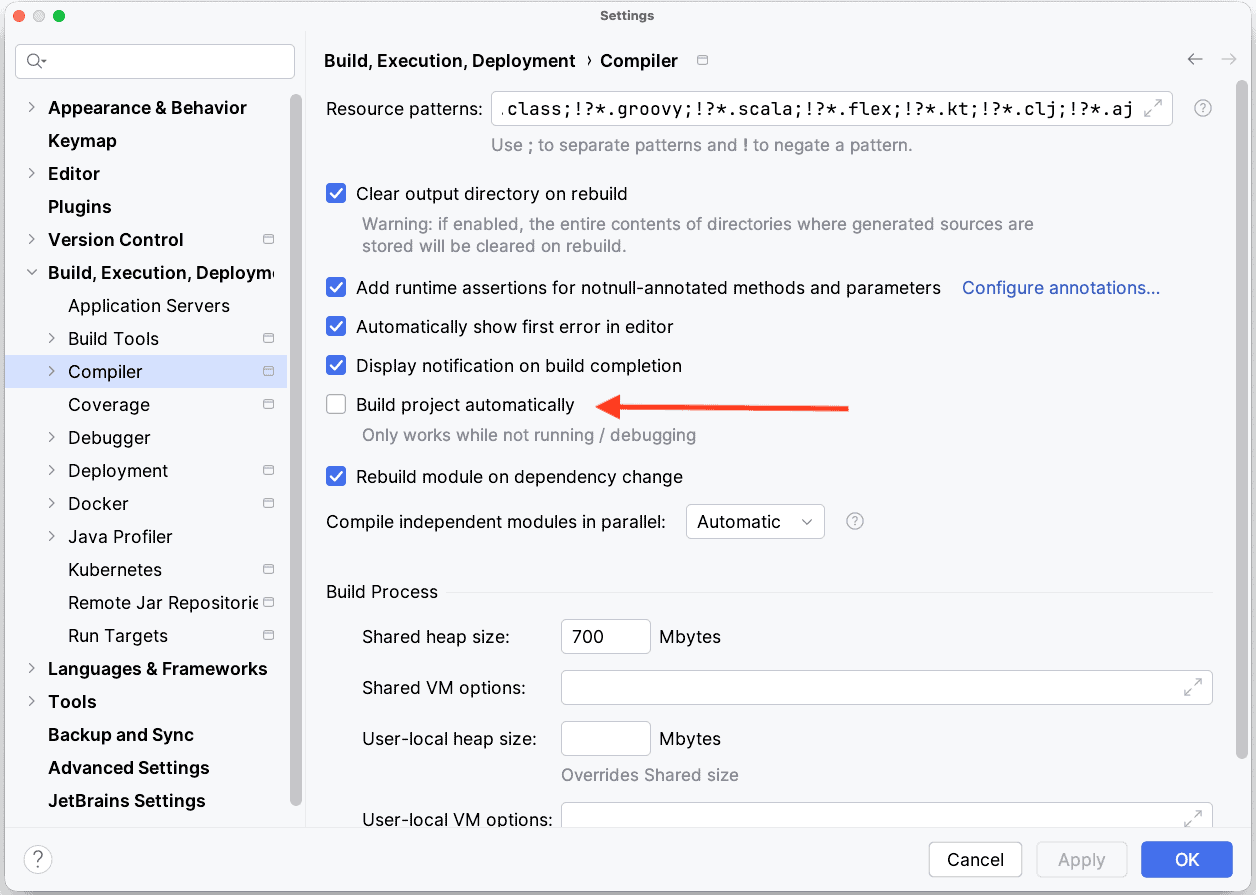
This brings us to the main settings page where we can manage how our project is built.
3.2. Step 2: Enable Automatic Build
Now that we are in the Compiler settings, check the option Build project automatically to enable automatic builds whenever changes are detected:
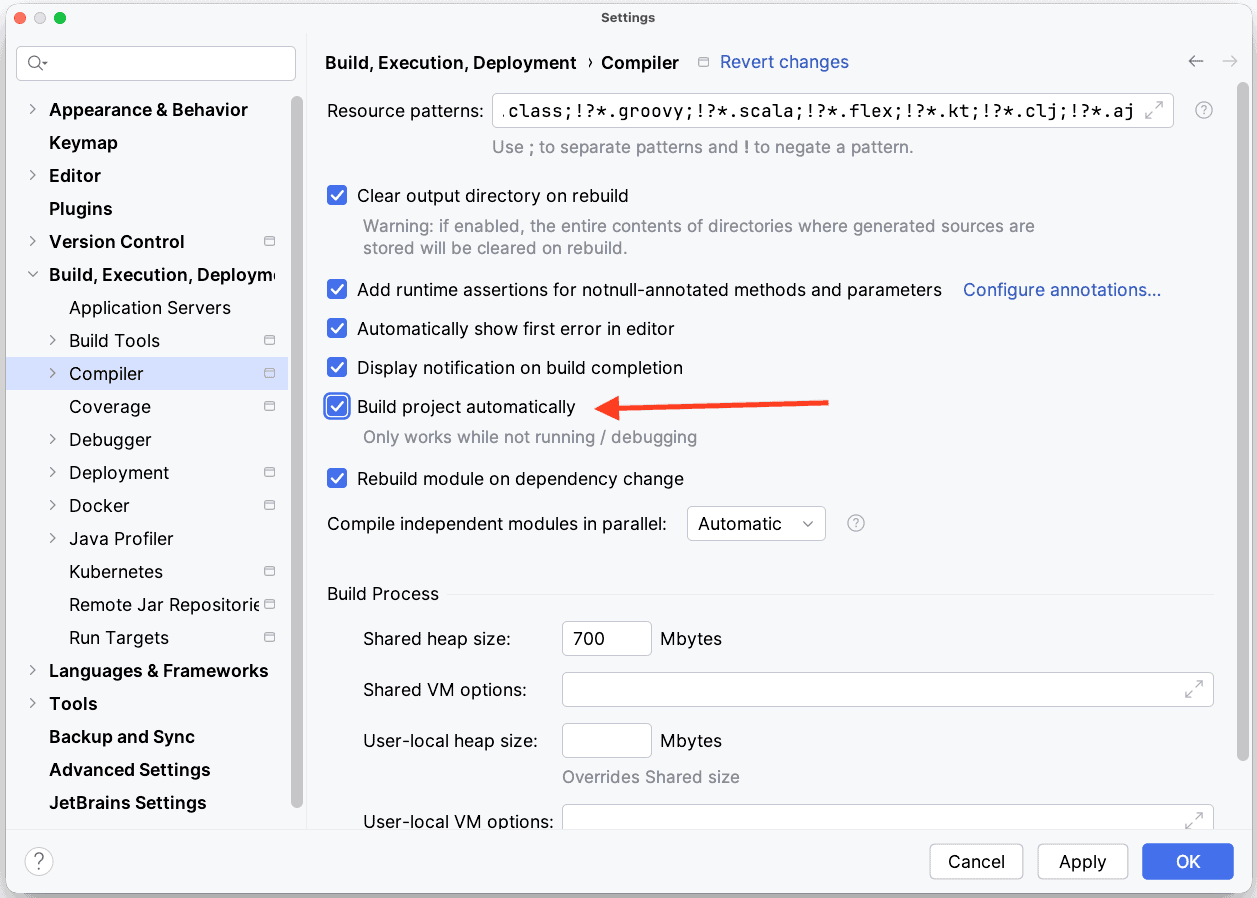
Build automatically ensures that IntelliJ keeps the compiled project up-to-date as we edit and save files. Specifically, we only need to ensure the “Build Automatically” checkbox is checked to enable this feature.
4. Conclusion
Enabling automatic project builds in IntelliJ IDEA is an easy way to reduce manual work during development, especially when used alongside hot reload tools. Moreover, the steps outlined in this article help us set up automatic builds and integrate them with real-time feedback mechanisms provided by IntelliJ’s notifications.
By continuously building the project as we code, we can ensure that our code is always compiled, reducing the risk of errors going unnoticed until later stages of development. This automatic building process helps improve development efficiency and allows for faster feedback cycles, making it easier to maintain code quality.














