


Learn through the super-clean Baeldung Pro experience:
>> Membership and Baeldung Pro.
No ads, dark-mode and 6 months free of IntelliJ Idea Ultimate to start with.
Learn through the super-clean Baeldung Pro experience:
>> Membership and Baeldung Pro.
No ads, dark-mode and 6 months free of IntelliJ Idea Ultimate to start with.
Search Engine Optimization (SEO) improves the visibility of a website in Search Engine Results Pages (SERPs). The main objective of SEO is to attract visitors to the website. This is why developing a strong SEO strategy is crucial for maximizing ROI (Return on Investment).
Interestingly, SEO now includes over 200 new rules and factors for evaluation. These rules can be divided into two main parts: on-page and off-page SEO. Both are essential for ensuring high-quality website content, achieving better search engine rankings, and attracting organic traffic.
In this tutorial, we’ll discuss on-page SEO and off-page SEO, as well as their differences and similarities.
On-page SEO deals with SEO factors that are within the user’s control. In particular, it focuses on optimizing the components within the website such as web content, keywords, titles, meta tags, internal links, and more. Moreover, the proper URL structure and HTML source code also play an important role in improving the On-page SEO:
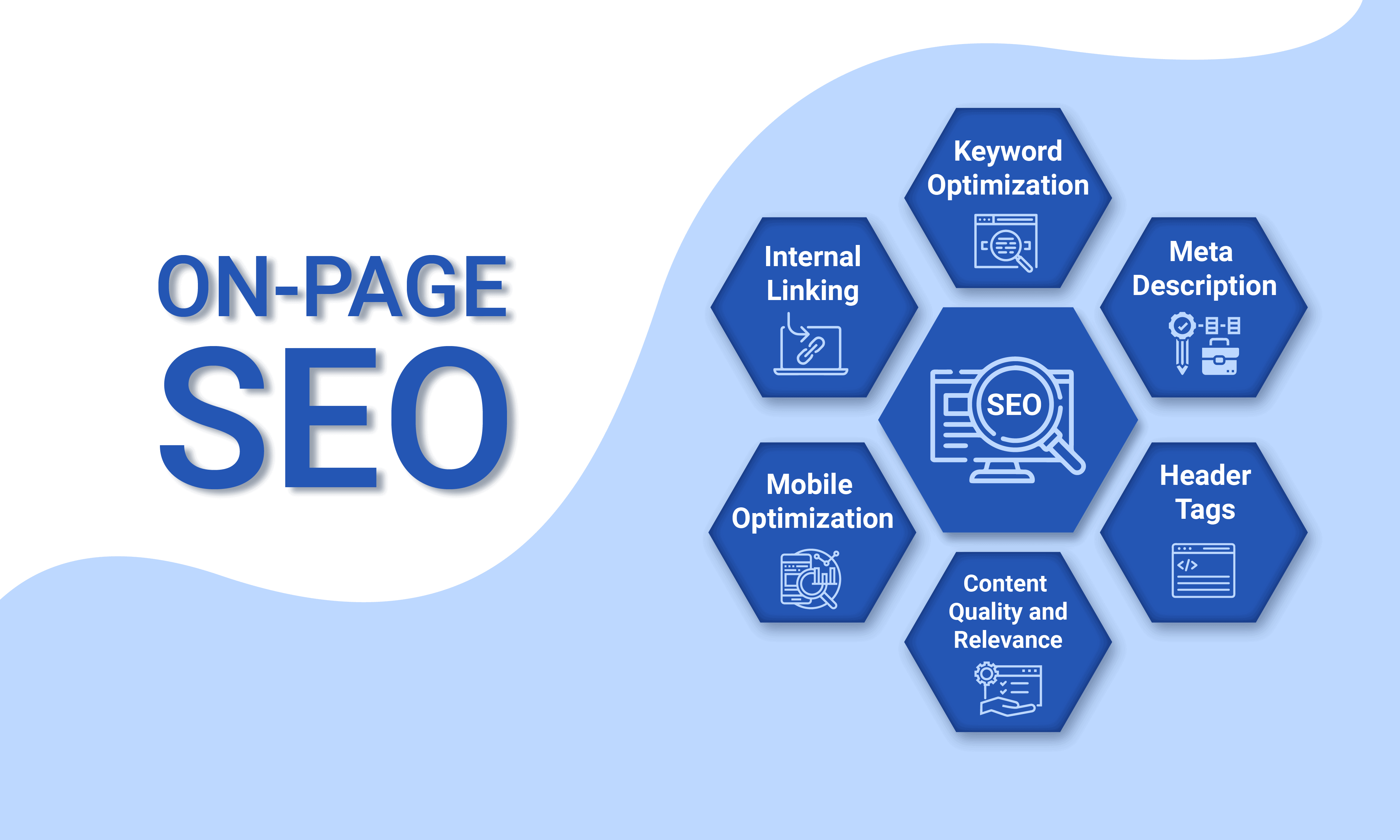
As a result, the proper use of on-page SEO techniques can improve the overall user experience of a website.
Let’s explore some of the following on-page SEO techniques to improve webpages:
Off-page SEO deals with SEO factors that are beyond the website itself. Specifically, it emphasizes strategies that promote the site across the web:
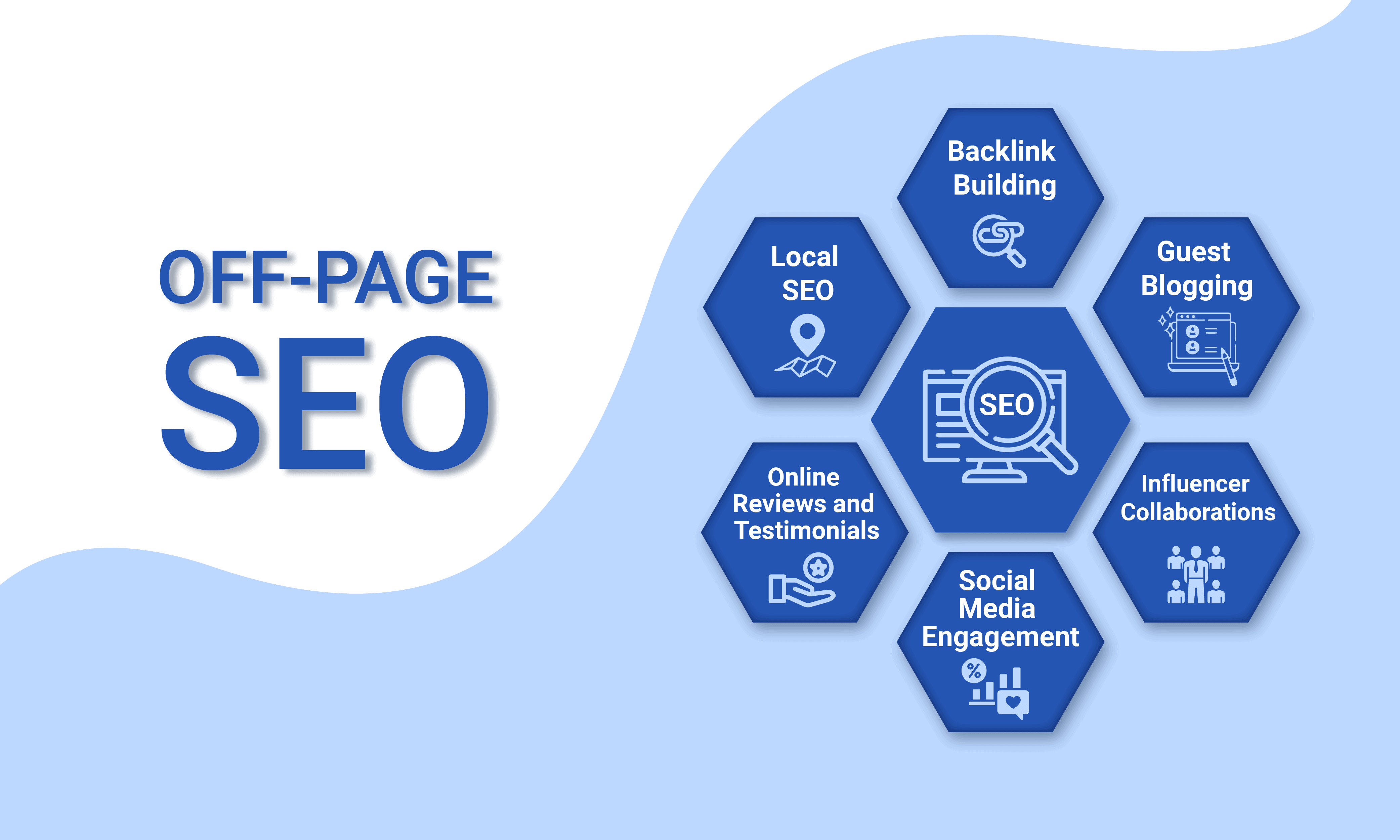
Furthermore, it involves activities that enhance the website’s ranking through external factors such as acquiring backlinks, NAP citations, and engaging with social media to boost the site’s authority. Its goal is to improve individual web pages on the websites to rank higher in search engines and attract more audiences.
To enhance the credibility and authority of the website we can focus on the following techniques:
Moving on, let’s discuss the differences between on-page and off-page techniques. To illustrate, think of them as two sides of the same coin. On-page SEO focuses on the SEO factors that occur on a page or webpage, while off-page SEO focuses on the SEO factors that are outside of a page:
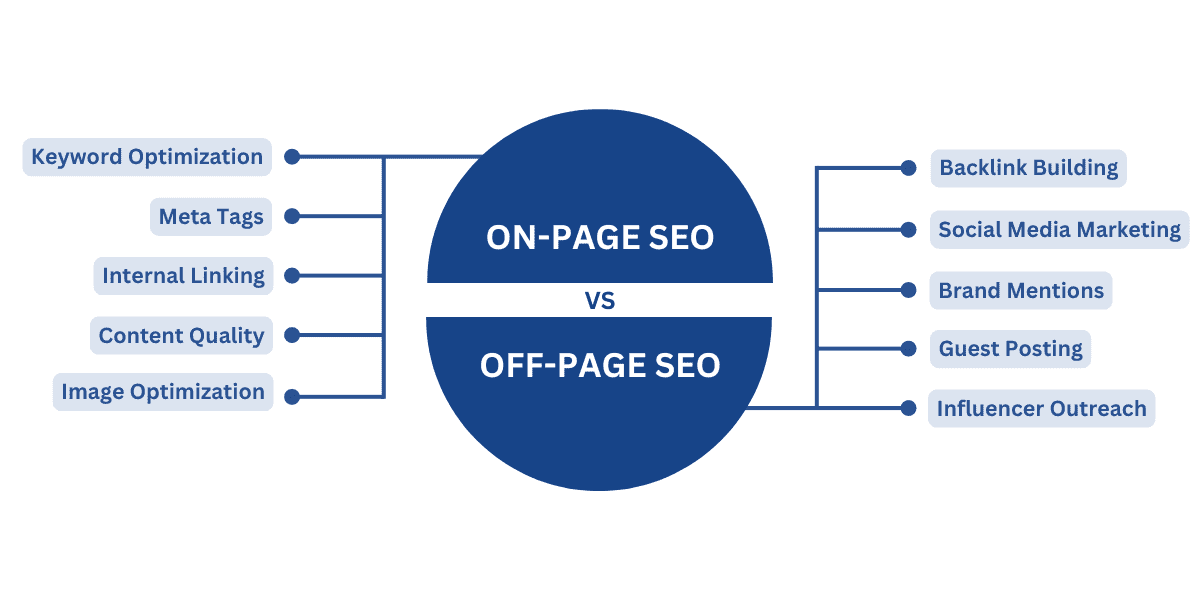
On-page techniques determine what we rank for, whereas off-page techniques define how high we rank in the search results.
Additionally, we can construct the following table for keeping in view the differences between on-page and off-page SEO:
| Aspects | On-Page SEO | Off-Page SEO |
|---|---|---|
| Definition | Optimizes content and site elements | Establishes external links and credibility |
| Focus | Enhancing individual webpages for better performance | Building the website’s external links, reputation, and credibility |
| Depending Factors | On-page SEO depends on the following factors:
|
Off-page SEO depends on the following factors:
|
| Techniques | Optimizes content structure, HTML source code, assures speed, and user experience | Develop relations for backlinks, content marketing, and social media engagement |
| Impact | On-page SEO boosts site relevance and improves search rankings | Off-page SEO increases site trust and drives more traffic |
| Role | Plays a major role in increasing the webpage search visibility | Improves the website’s reputation and trustworthiness |
| User Control | Users have direct control over on-page SEO changes and advancements | Users have limited control over off-page SEO, as it relies more on external resources |
| User Experience | On-page SEO improves user experience | Off-page doesn’t directly aid in user experience but indirectly contributes to it as it focuses on building external credibility |
Thus, we discussed a few key aspects of on-page SEO versus off-page SEO techniques.
All in all, in this article, we discussed on-page and off-page SEO. On-page SEO focuses on optimizing individual web pages, while off-page SEO focuses on improving a website’s overall quality. Both techniques are essential for maintaining a website’s quality and visibility in search engine results. Therefore, we should focus on both techniques to achieve the desired organic traffic.